Commercial kitchen fire suppression · CMJS series
Kitchen fires are out in 3–5 seconds — before your kitchen is.
Automatic wet-chemical suppression for stoves, fryers and exhaust ducts. Fusible-link detection at 183°C, fuel shut-off and water cool-down — 24/7, no power required.
Products
Kitchen Fire Suppression Systems — Commercial & Home
Wet-chemical (potassium acetate) systems engineered for restaurant ranges, deep fryers and exhaust ducts, plus two compact household units for family stovetops. Designed to GA 498-2012.
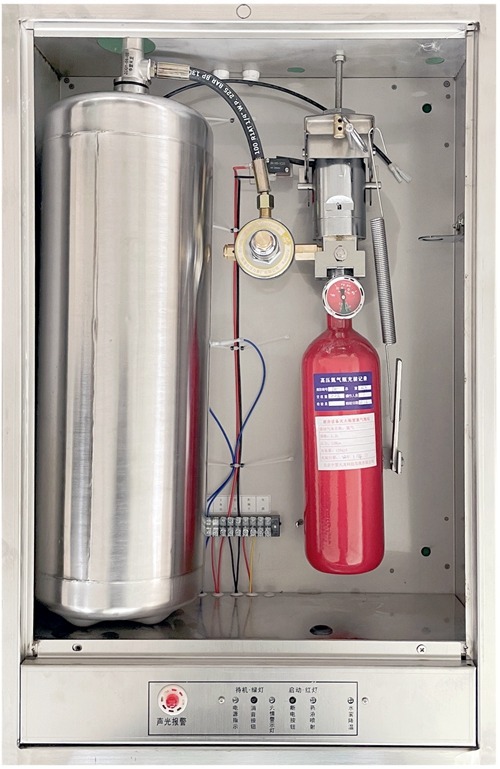
CMJS9-1 · Single-Tank System
- Protects up to 9 hazard units (600 mm fryers / duct ports)
- Ideal for food trucks, kiosks, small kitchens
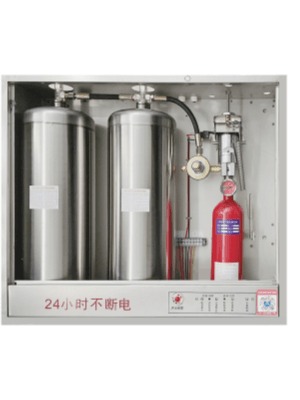
CMJS18-2 · Dual-Tank System
- Protects up to 18 hazard units
- For hotel & chain-restaurant cook lines
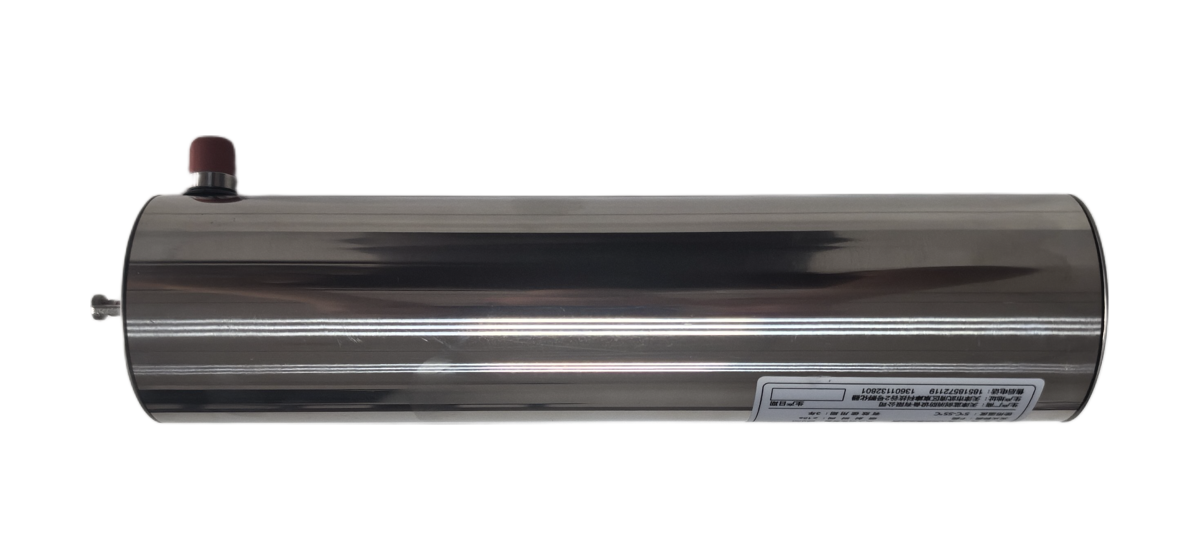
S-1-D · Single-Pot Household System
- One probe + one nozzle for a single wok or fryer
- For apartments, rentals & dorm kitchens
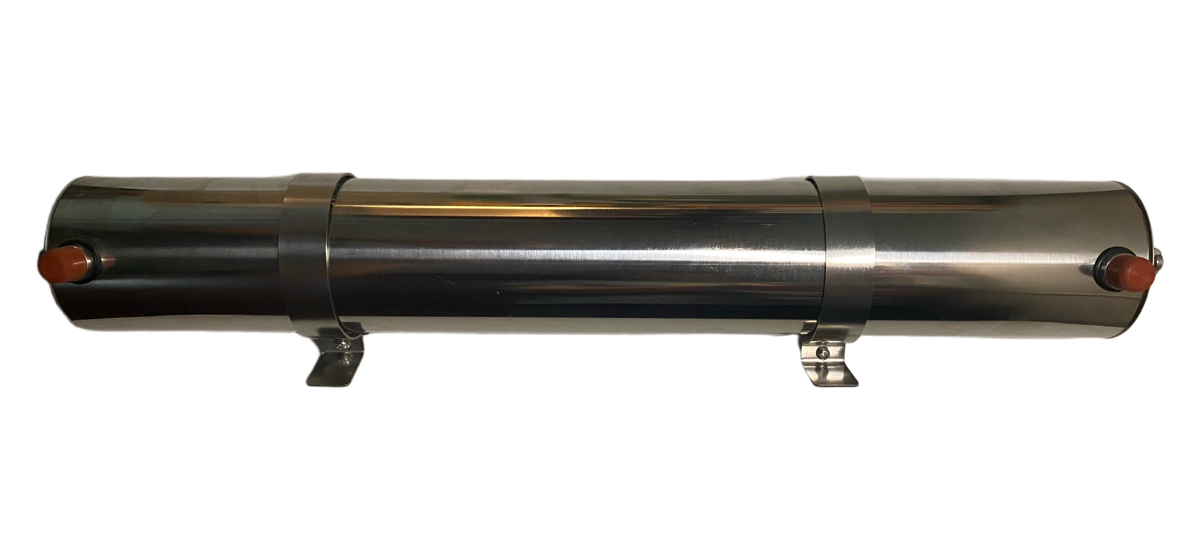
S-2-S · Dual-Pot Household System
- Covers two burners or a double-wok station
- Optional gas shut-off, works without power
Unattended-Cooking Alarm
Human-presence radar linked to the hood fan — alerts when the stove area is left unattended, stopping fires before they start.
Oil-Temperature Monitor
Continuous fryer-oil temperature tracking with over-heat warning — prevents auto-ignition of cooking oil.
How it works
From flame to foam — five steps, no power required
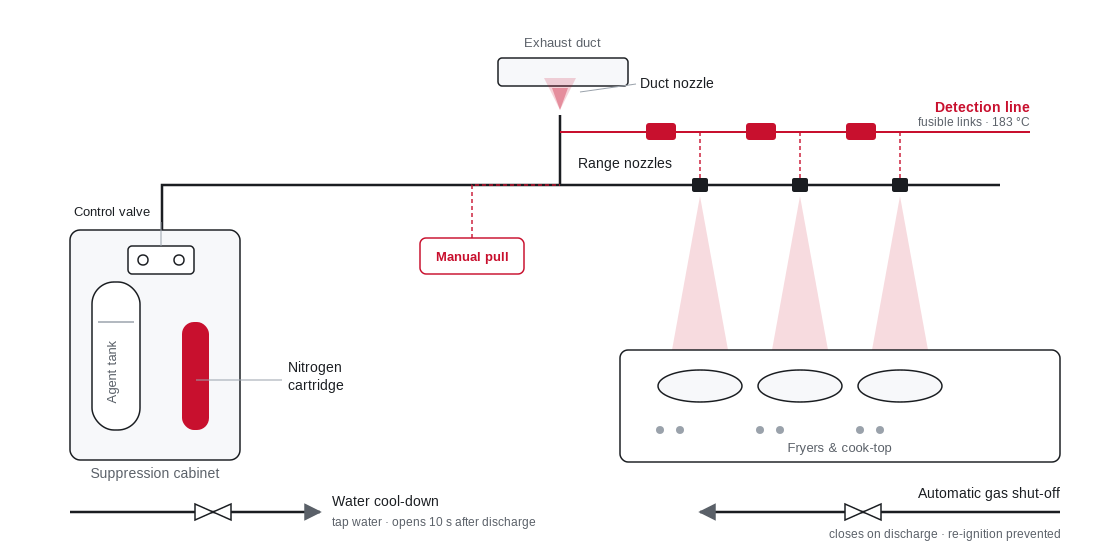
Detection, actuation and discharge are fully mechanical: no power supply, no wiring and no electronics between the fire and the agent — which is why the system still works in a blackout.
Heat detected at 183 °C
Fusible-link detectors sit over the fryer and wok line and inside the exhaust duct. Flame heat melts the link — the only “sensor” in the system.
Link parts, actuator trips
The link separates and releases a spring-loaded actuator that pierces the nitrogen cartridge. No electricity, no control panel, nothing to fail in a power cut.
Agent leaves the tank
Pressurised nitrogen drives the wet-chemical (potassium acetate) agent through the piping to every nozzle — cooking surfaces and duct inlet fire together.
Flame out in 3–5 seconds
The agent saponifies the burning oil into a foam blanket that seals the surface and blocks re-ignition. Extinguishing time: 3–5 s from discharge.
Cool-down & gas shut-off
About 10 s later a water valve opens to cool the oil below its auto-ignition point, the gas supply valve closes automatically and the alarm sounds.
Why KitchenFireGuard
A real factory, not a trading desk
Beijing Zhongzhi Tianlong has built kitchen fire suppression since 2006 — R&D, production, installation and service under one roof. KitchenFireGuard is the export brand of our own trading company, Jinan Saga International Trading Co., Ltd. — one group, factory-direct, no intermediaries.
Applications & references
Trusted in China’s busiest kitchens
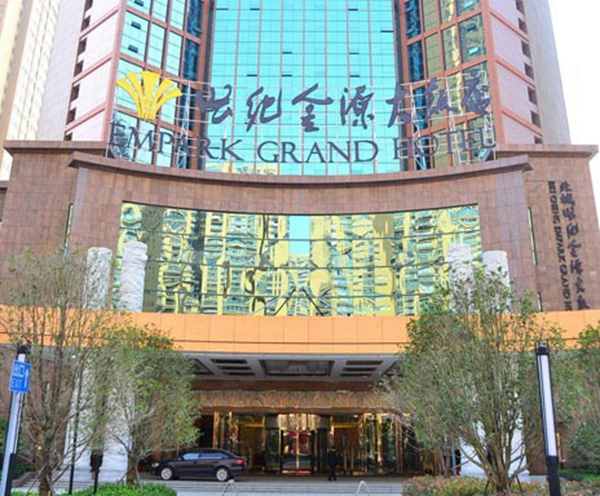
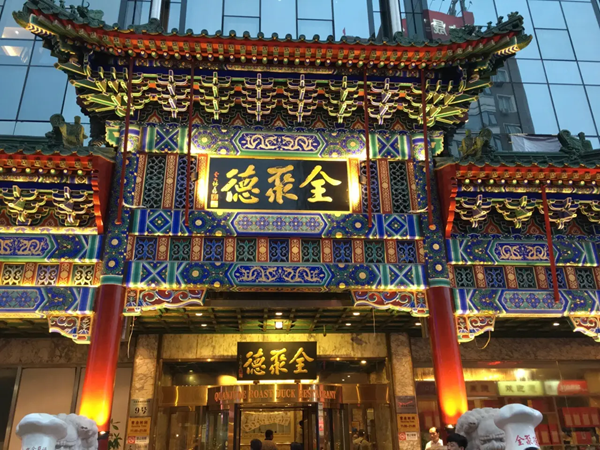
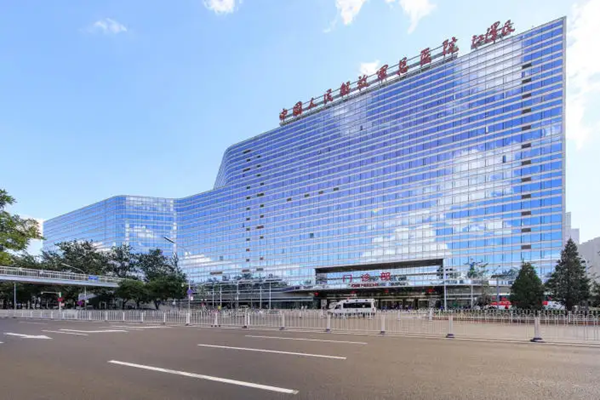
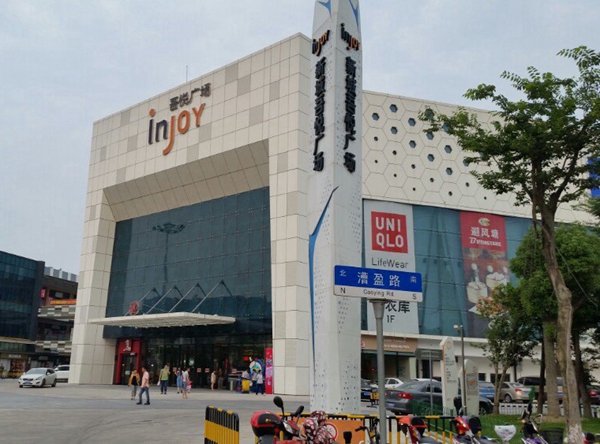
Hotel banquet lines, restaurant chains, hospital canteens, university dining halls and mall food courts — installed and serviced by our own nationwide team.
Certifications
Certified, insured, verifiable
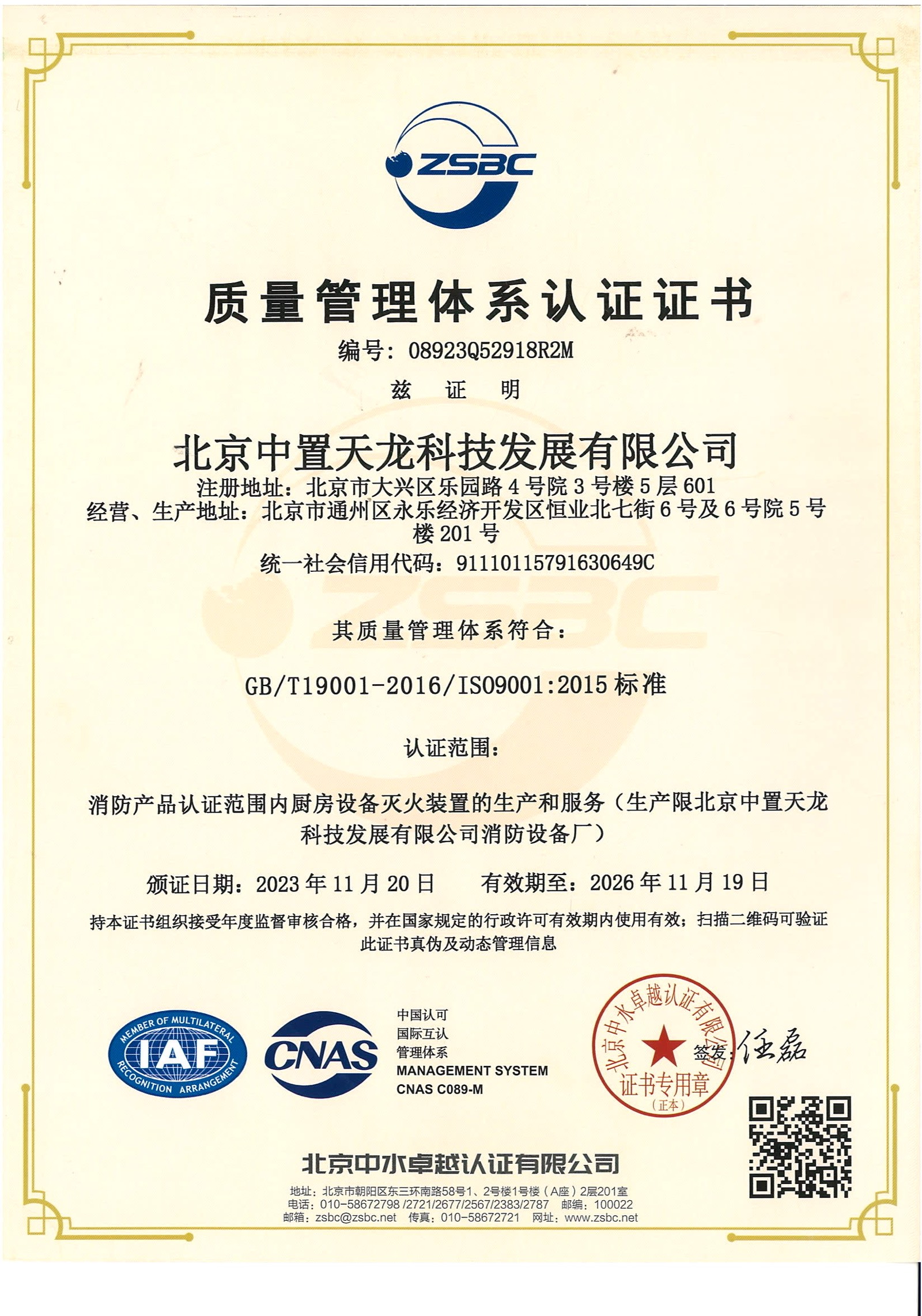
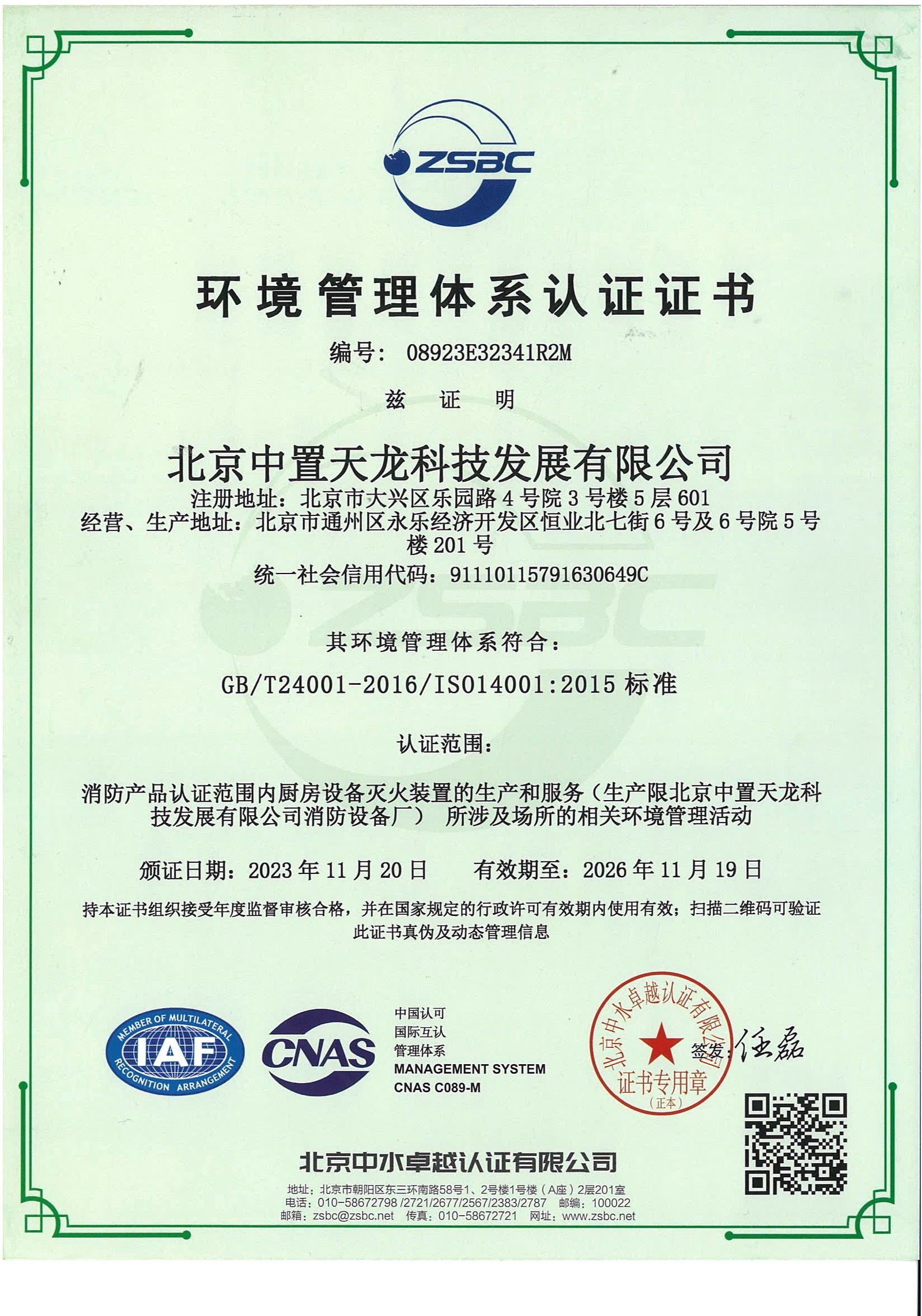
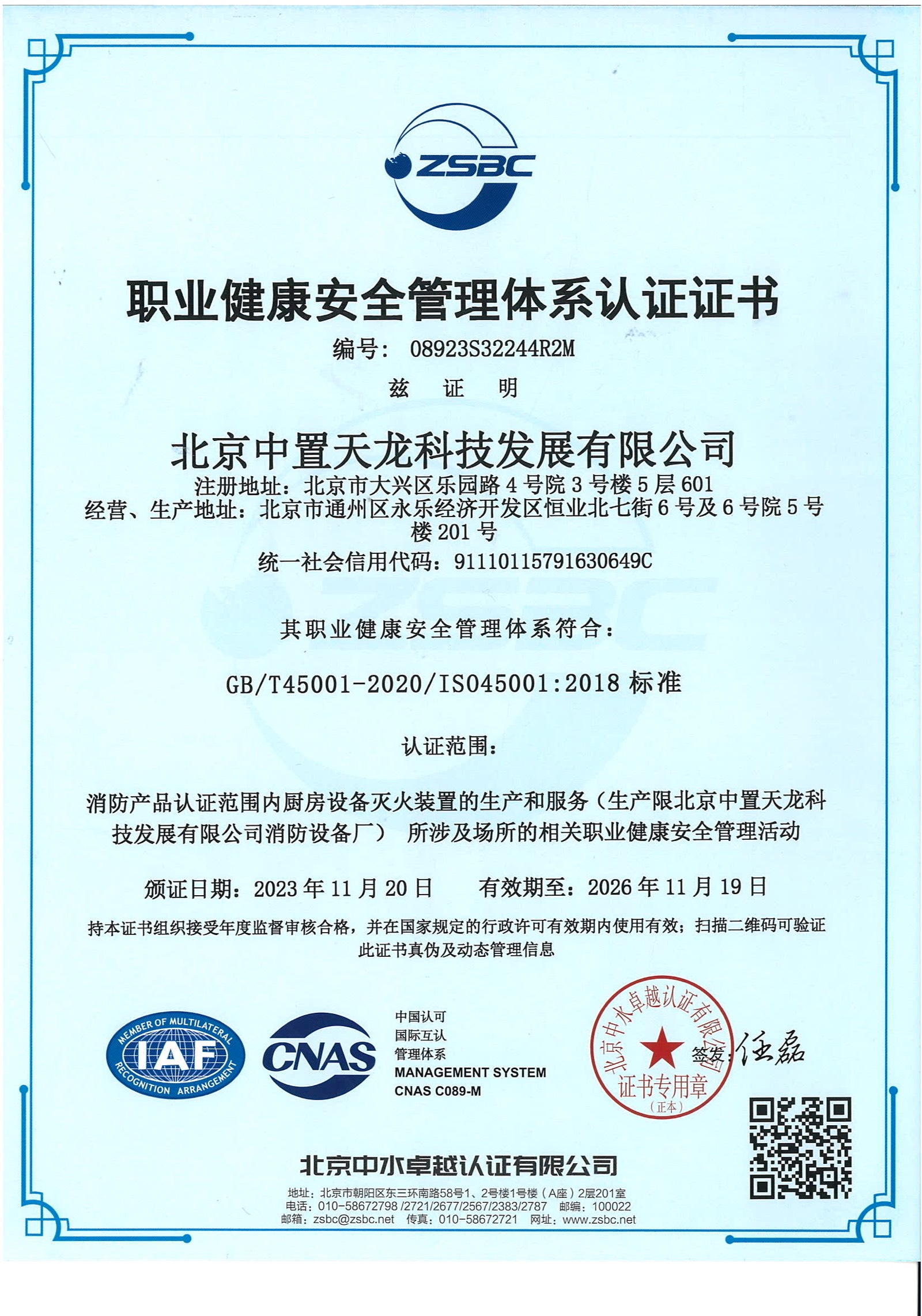
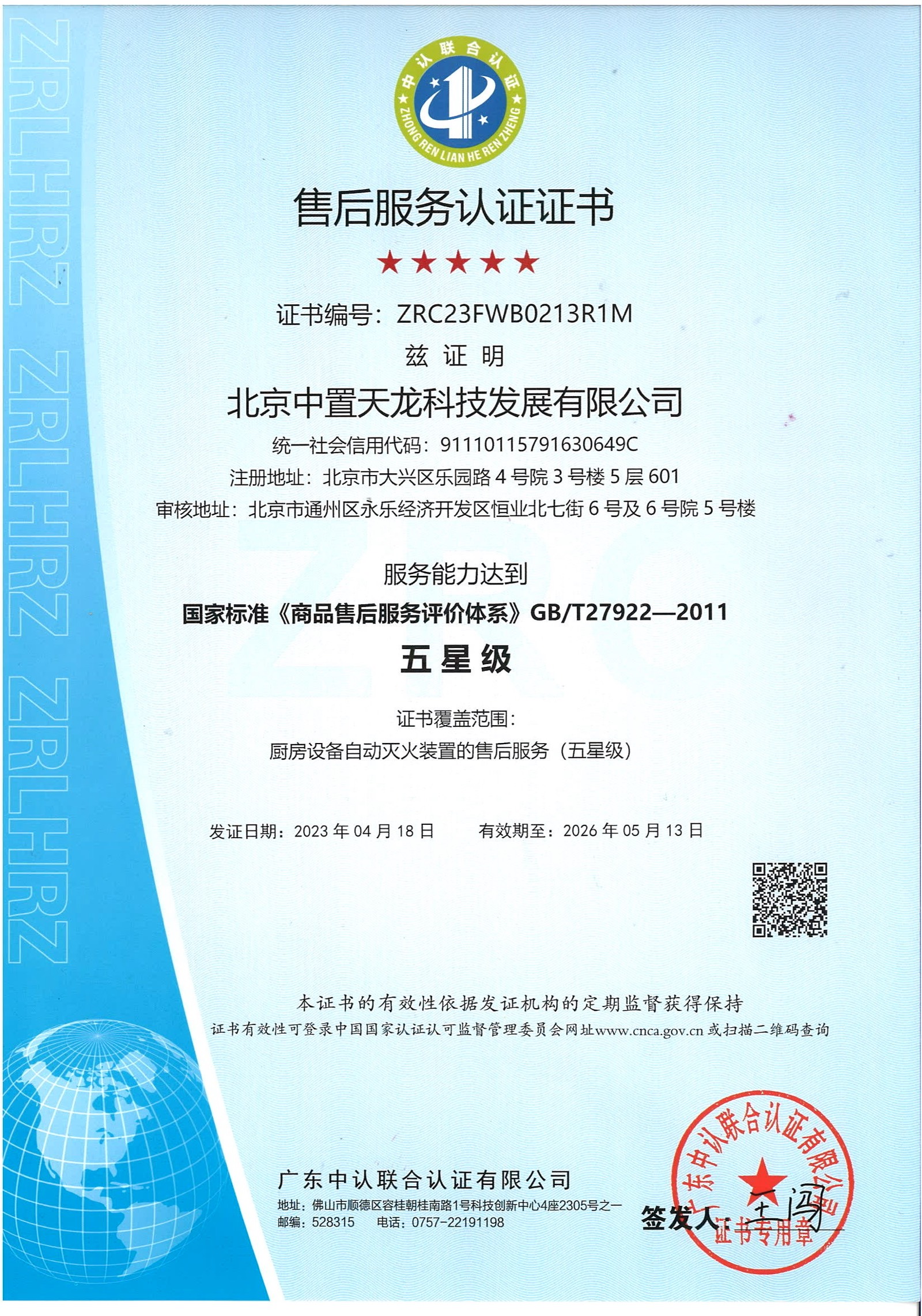
CCCF fire-product certification, ISO management systems and third-party test reports by the National Fixed Fire Extinguishing Systems QA Centre.
FAQ
Buyer questions, answered
What standards is the system designed to?
Designed and type-tested to China’s GA 498-2012 (now numbered XF 498-2012, the national standard for automatic kitchen fire suppression), with GB 50016-2014 and CECS 233:2007. Full-scale test reports were issued by the National Fixed Fire Extinguishing Systems and Fire-Resistant Building Components Quality Supervision & Test Centre. How that standard compares with NFPA 17A, UL 300 and EN 17446 is set out in the standards guide.
Can you support our local certification (CE / UL 300 / SASO)?
Yes. For volume orders we support destination-market certification arrangements and provide complete technical documentation (drawings, manuals, test reports, MSDS) for your import approval process.
How is the system refilled after discharge?
Replace the nitrogen cartridge and refill the agent tank — a 30-minute job by any trained technician. We supply refill kits and provide video guidance; annual inspection is recommended per local fire code.
What does a system cost?
A single commercial cook line usually lands between USD 3,500 and 12,000 installed, Our own systems are USD 1,800 (CMJS9-1) and USD 2,800 (CMJS18-2), FOB China. The cost guide breaks down every line; send four numbers (appliance list, duct openings, destination port, quantity) and we price your line in one working day.
What is your MOQ and lead time?
Sample orders from 1 set are welcome. Standard lead time is 15–25 days depending on configuration; neutral-packaging OEM is available.
Does it work during a power failure?
Yes — detection and actuation are fully mechanical. The optional smart-cloud module is the only powered part, and it is not required for extinguishment.
Get a factory-direct quotation
Send us your kitchen layout or hazard-unit count — we’ll size the system and quote within 24 hours.
Start an Inquiry