Standards guide · NFPA 17A · UL 300 · XF 498-2012 · EN 17446
NFPA 17A vs UL 300 vs XF 498-2012: What Each One Actually Governs
These four documents are constantly quoted at each other in tenders, yet they do four different jobs. One is a product standard, one is a design and installation standard, one is a fire test, and one is a European design code. Knowing which is which decides whether a supplier’s certificate is even relevant to your project.
- 🇺🇸 UL 300 — the test a system must pass; not an installation rule
- 🇺🇸 NFPA 17A — how a wet-chemical system is installed, inspected, maintained
- 🇨🇳 XF 498-2012 (ex GA 498-2012) — China’s product standard, enforced through CCCF
- 🇪🇺 EN 17446:2021 — European design, documentation and test requirements
Four documents, four different jobs
| UL 300 | A fire test. Proves a pre-engineered system can put out a cooking fire on real appliances and keep it out. A product either passes and gets listed, or it does not. |
|---|---|
| NFPA 17A | A design, installation and maintenance standard. Says how a wet-chemical system is laid out, how often it is inspected, what the manual pull must do, what records are kept. |
| XF 498-2012 | A product standard. Defines how a kitchen fire suppression system sold in China is built, classified, tested and type-approved — the technical basis for CCCF certification. |
| EN 17446:2021 | A European system standard. Design, documentation and test requirements for fixed automatic systems protecting appliances, hood, plenum and extract duct. |
| NFPA 96 | An installation code. Ventilation control and fire protection for commercial cooking operations — the document that pulls UL 300 and NFPA 17A into a legal requirement. |
A supplier saying “we meet UL 300” and a supplier saying “we are NFPA 17A compliant” are making two different claims. Neither sentence tells you the system is legal in your jurisdiction — that depends on which code your local authority enforces, and on the listing or certification mark on the cabinet.
UL 300: the 1994 line in the sand
UL 300 has existed since 21 November 1994, and almost every misunderstanding about kitchen suppression traces back to what changed that day.
Before 1994, commercial kitchens fried mostly in animal fat, and dry chemical systems handled those fires. As kitchens switched to vegetable oils with a much higher auto-ignition temperature — roughly 363 °C / 685 °F — and as high-efficiency fryers became better insulated and slower to cool, dry chemical stopped working. It knocked the flame down and the oil re-ignited minutes later.
The revised test changed three things at once. It used real cooking appliances rather than simulated pans. It ran a higher heat-release fire across fryers, griddles, ranges, char-broilers and woks. And it required the system to hold the fire out, not just suppress it momentarily. Only wet-chemical agents passed — potassium acetate, carbonate or citrate solutions that saponify on contact with hot oil and leave a foam blanket, while the water content cools the oil below its re-ignition point.
Because it is a test, UL 300 also implies a fixed scope of protection: nozzles over each grease-producing appliance, nozzles in the hood and at the duct entry, a manual pull station on the egress route, automatic fuel shut-off for gas and electric appliances, and semi-annual service by a licensed company. A system that skips any of those is not a UL 300 system, whatever the label says.
Read the two standards together and the relationship is simple: UL 300 tests the hardware, NFPA 17A tells the installer what to do with it. NFPA 96 then makes the pair mandatory for any commercial cooking operation with a Type I hood.
NFPA 17A: what it actually requires
First published in 1984, NFPA 17A is the Standard for Wet Chemical Extinguishing Systems. It covers installation, operation, inspection and maintenance of pre-engineered wet-chemical systems for commercial cooking areas. In practice it asks for:
| Detection | Fusible links or listed heat detectors positioned over the appliances, in the plenum and at the duct entry — rated for kitchen temperatures, and replaced when contaminated by grease. |
|---|---|
| Actuation | Automatic on link failure, with a mechanical manual pull station on the egress route. No reliance on mains power for detection or discharge. |
| Agent and coverage | Wet chemical applied through appliance-specific nozzles, with hood, plenum and duct coverage — not appliance coverage alone. |
| Interlocks | Automatic shut-off of gas and electric energy to the appliances, plus alarm notification where the system interfaces with the building. |
| Inspection and service | Regular inspection of links, nozzle caps, gauges and valve operation; semi-annual professional service is the interval most authorities enforce, and links are replaced at each visit. |
| Records | Documented service history and a tag on the system. Inspectors ask for the paper, not the promise. |
One trap for buyers: NFPA 17A tells you how to install, but it does not by itself certify that the product works. A system can be installed to 17A and still fail an acceptance test if the hardware was never listed to UL 300.
XF 498-2012 (formerly GA 498-2012): China’s product standard
China regulates kitchen suppression as a product first, installation second. XF 498-2012 is that product standard.
| Number | GA 498-2012 was issued by the Ministry of Public Security on 19 June 2012 and took effect on 1 September 2012, replacing GA 498-2004. |
|---|---|
| Why the prefix changed | When the standard’s administration moved to the Ministry of Emergency Management, the designation changed from GA to XF on 25 August 2020. The technical content was not changed — GA 498-2012 and XF 498-2012 are the same document under two prefixes. |
| What it covers | Terms and definitions, classification, model designation, basic parameters, requirements, test methods, inspection rules and manual content — for systems installed inside buildings. |
| Mandatory chapters | Chapter 5 (requirements) and Chapter 7 (inspection rules) are mandatory; the rest is informative. That is why a type-test report is the document consultants ask for first. |
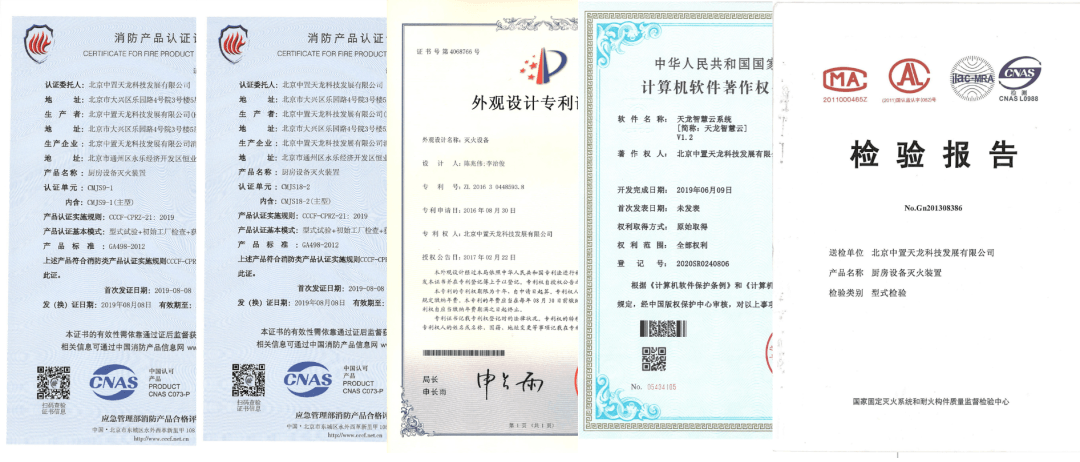
| Market access | CCCF certification — China Compulsory Certification for fire products — is issued against this standard, following type testing at the National Fixed Fire Extinguishing Systems QA & Test Centre. |
| What it does not give you | It is not a UL listing and not a CE mark. It is the proof that the product was built and tested to the Chinese national requirement — which many markets outside North America and the EU accept, and some do not. |
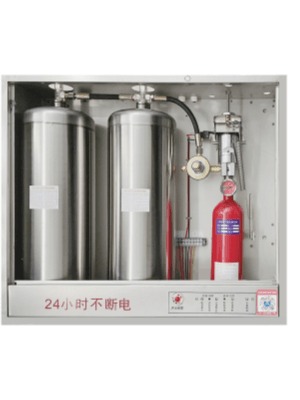
The CMJS9-1 and CMJS18-2 are CCCF certified against this standard (valid to June 2029), with the national type-test report and the manufacturer’s ISO 9001 / 14001 / 45001 certificates available for review — all on the certifications page.
EN 17446:2021 and the European route
Europe does not run a single UL-style listing for kitchen suppression. EN 17446:2021 is the reference standard for the system as a whole.
Its scope is design, installation, function, testing and maintenance of fixed automatic systems protecting cooking appliances, hood, plenum and extract duct, plus construction and performance requirements for pre-engineered systems. It explicitly excludes household kitchens and industrial food production. Detailed plenum and duct test procedures sit in CEN/TS 17749, and the 2021 edition has since been amended (EN 17446:2021+A1).
Two practical points follow. First, EN 17446 is a design and test standard, not a certification mark — so European tenders usually add a national approval on top, such as VdS in Germany or LPCB in the UK, and expect CE marking for the assembly. Second, a Chinese system without those approvals is not automatically unacceptable in Europe, but it is unacceptable in a project whose specification names them. Confirm at tender stage which document your consultant will accept, in writing.
Where the CMJS series sits — honestly
We would rather lose a project at the specification stage than ship a system that fails an inspection. So here is the exact position.
| What we hold | CCCF fire-product certification against XF 498-2012 (ex GA 498-2012), valid to June 2029; national type-test report with all items passing; ISO 9001, 14001 and 45001; design also references GB 50016-2014 and CECS 233:2007. |
|---|---|
| What we do not hold | UL 300 listing, UL/FM approval, CE marking or a VdS/LPCB certificate for the CMJS models. We will not describe the system as “UL 300 compliant” — the phrase would be false. |
| North America | A UL 300-listed system is required in practice. Our hardware does not satisfy that, so we do not quote the CMJS for US or Canadian commercial kitchens. |
| European Union | Projects generally specify EN 17446 plus national approval and CE marking. Verify with your consultant before ordering; for many EU projects the answer will be no. |
| Middle East, Africa, Southeast Asia, Latin America | Many authorities accept a CCCF-certified system with a full type-test report, or specify performance requirements rather than a named listing. This is where the CMJS series is most often supplied. |
| China and Chinese-standard projects | XF 498-2012 plus CCCF is the correct and expected route. |
The mechanism is the same in all four standards — thermal detection, mechanical actuation, wet chemical, automatic fuel shut-off — and the CMJS series is built to that logic. What differs is the paperwork your authority will accept.
How to read the standard citation in a tender
Design or test?
“Installed to NFPA 17A” is a design requirement. “UL 300 listed” is a product requirement. You need both, and one does not imply the other.
Which edition?
UL 300 has one defining revision (1994). XF 498 rolled over from GA 498 without content change in 2020. A specification that names an edition and a year can be checked; “to international standards” cannot.
Who signs off?
Ask which authority inspects the finished kitchen and what document it will read. That answer, not the standard number, decides whether a certificate pack is sufficient.
If the citation is ambiguous, send it to us with the project location. We will tell you whether the CMJS series can be offered, and if it cannot, we will say so before you spend time on drawings. Sizing, layout and standard mapping are free — see also what a system actually costs.
Buyer questions on standards
Is NFPA 17A the same as UL 300?
Is GA 498-2012 still valid, or is it XF 498-2012 now?
Can a CCCF-certified system be installed in the US or EU?
Why did UL 300 eliminate dry chemical systems?
What activation temperature should the fusible link be?
Does EN 17446 replace national approvals in Europe?
Which document should I send a supplier before asking for a price?
Not sure which standard your project names?
Send the specification clause and the project country. We will tell you within one working day whether the CMJS series can be offered — and if it cannot, we will say so.
Send the Clause